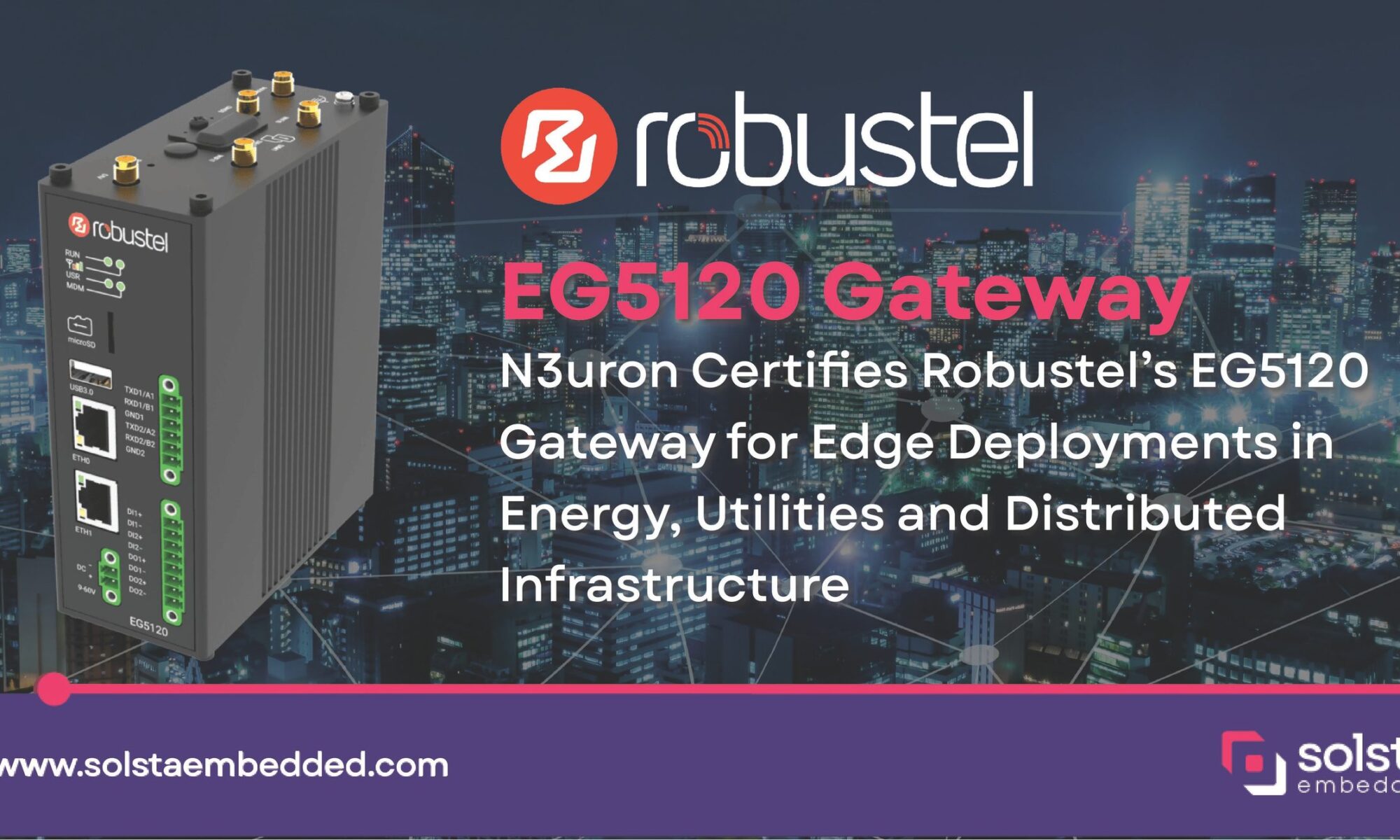
Unlocking Performance, Security, and ROI with the Robustel EG5120 Edge Gateway
Industrial operations are outgrowing legacy gateways. The EG5120 isn’t just an upgrade, it’s a leap: a combined edge router + AI-capable compute node built for mission-critical environments. It brings autonomous decision making to the factory floor, with hardened security, open architecture, and enterprise scale.
A new whitepaper from Robustel walks through how the EG5120 modernizes IIoT infrastructure without ripping and replacing your stack delivering faster decisions, lower risk, and lower OpEx across your fleet.
What you’ll learn
Why edge computing has become a strategic imperative (not optional) in industrial systems
How the EG5120’s hardware (CPU, NPU, modular I/O) meets real-world use cases
How RobustOS Pro + Docker + RCMS deliver developer agility and operational control
How layered security, zero-touch management and remote diagnostics reduce downtime and support cost
Real-world industrial use cases showing ROI, performance, and deployment lessons
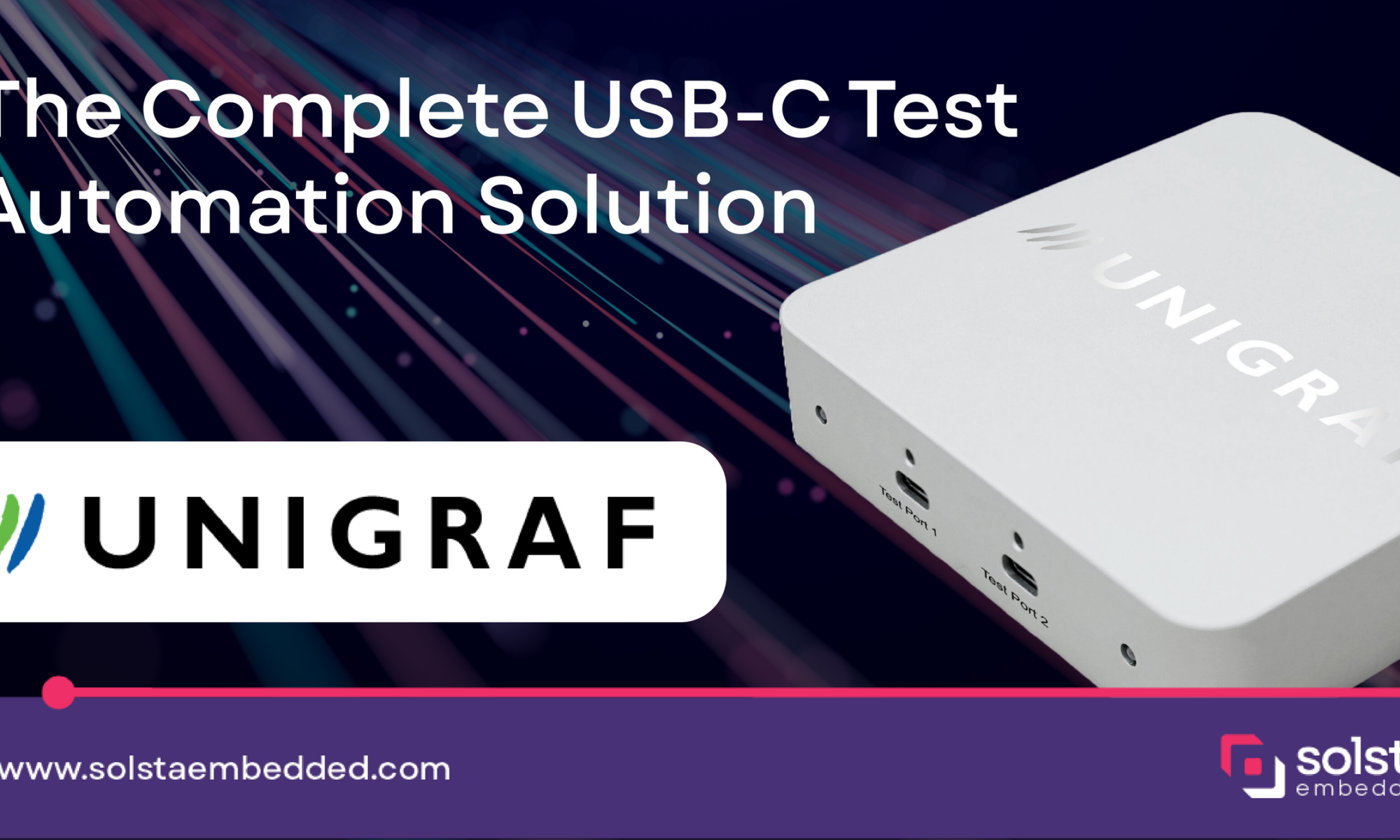
The Complete USB-C Test Automation Solution: UTC-274 Tester & PTU-240 EPR Power Test Unit
Simplify USB Type-C testing from development through production with the UTC-274 and PTU-240. Together, they provide a flexible platform for validating USB Type-C and USB Power Delivery performance while reducing test time and improving manufacturing efficiency.
UTC-274 – 4K USB Type-C® Automation Test Tool
UTC-274 is a test automation tool for testing two USB-C products in production line and R&D environments. UTC-274 features a versatile and reliable way of testing connector pins of the USB-C interface. UTC-274 test coverage includes video, audio, DisplayPort Alternate Mode, Power Delivery 3.1, USB 2.0 & USB 3.2, USB4 mode check and EPR test functionalities. UTC-274 is delivered with an SDK with a set of automatic test script samples and support for Python scripting.
PTU-240 – 240W USB-C Power Test Unit for testing Extended Power Range (EPR) in USB Type-C® sinks and sources
Delivering up to 240W of power, the PTU-240 functions as both a standalone Extended Power Range (EPR) test instrument and a seamless accessory to the UTC-274. By combining a programmable DC electronic load and power supply in a single compact unit, the PTU-240 expands the UTC-274’s capabilities to deliver comprehensive USB-C power testing.
Getac has launched the new G140 tablet – its first AMD-powered fully rugged tablet as a Copilot+ PC. The G140 is aimed at public safety, automotive and manufacturing professionals who require versatile rugged devices that can run demanding edge AI applications in the field.
Real-time AI-powered performance
The G140 is engineered for optimal productivity in the field. Featuring an AMD RyzenTM AI 5 340 / 7 350 CPU, AMD RadeonTM 840M / 860M GPU, and AMD XDNATM 2 NPU (up to 50 TOPS), it delivers seamless AI-powered processing performance and high-quality visuals directly at the point of work. This advanced AMD architecture is specifically optimized for efficiency, providing exceptional battery endurance to support long shifts between charges without compromising on power.
The G140 also excels at multitasking, handling demanding field applications with high levels of responsiveness. Furthermore, its integrated graphics capabilities allow professionals to view high-resolution maps and complex schematics with superb clarity, eliminating the need for a separate GPU. Extensive communication options, including Wi-Fi 7, Bluetooth 5.4, 4G LTE (optional), 5G Sub-6 (optional), and dual-SIM (optional) keep users connected in even remote locations, while two USB 4 ports as standard support high-speed data transfer, high-resolution video output, and power delivery.
Field friendly design
At the heart of the G140 is a 14-inch LumiBond screen with 1,000 nits of brightness and sunlight readable display, offering exceptional usability when working outside in changeable weather conditions. Usability is further enhanced by Getac’s Smart Touch auto-sensing technology, which automatically adapts to inputs from a finger, stylus or glove without the need for manual mode switching, while a new dual-speaker design makes it well suited to noisy indoor and outdoor environments.
The G140 also features Getac’s hot-swappable battery technology and can accommodate high-capacity batteries (optional) for long periods of uninterrupted use. A robust suite of security features including TPM 2.0, Windows Hello face-authentication camera, AMD PRO (optional), HF RFID reader (optional), fingerprint reader (optional) and smart card reader (optional), keeps sensitive data safe at all times.
A wide range of carrying and mounting options offer enhanced mobility in the field. These include a hard handle, and a rotating hand strap, magnetic mount and kickstand – the latter three made possible via an integrated VESA mount that this is part of the G140 chassis. These options allow the G140 to be conveniently carried and/or mounted onto nearby surfaces for easy hands-free operation. Vehicle docks from Havis and Gamber-Johnson also support secure in-vehicle charging and operation.
Fully rugged protection in a portable and lightweight form factor
Like all Getac devices, the G140 is built to thrive where other devices or equipment may fail. MIL-STD-810H and IP66 certifications, 4 ft (1.2m) drop resistance and an operating temperature range of -29°C to 63°C / -20°F to 145°F ensure high levels of reliability in challenging work environments, helping to minimise unplanned downtime and reduce capital/operating costs.
Despite its fully rugged credentials, the G140 is also incredibly light. At just 1.79kg/3.95lbs, it is easy to carry and operate for extended periods of time.
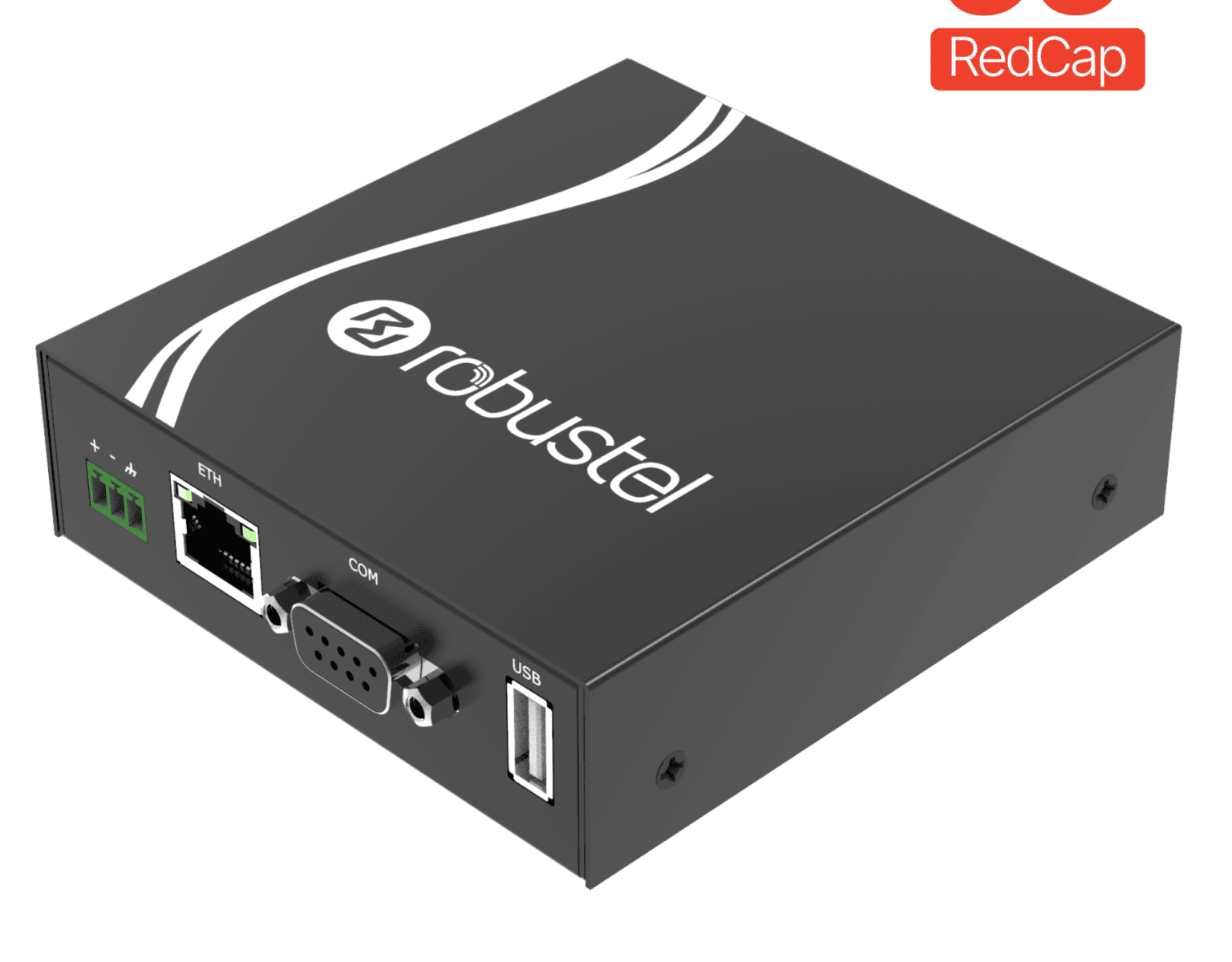
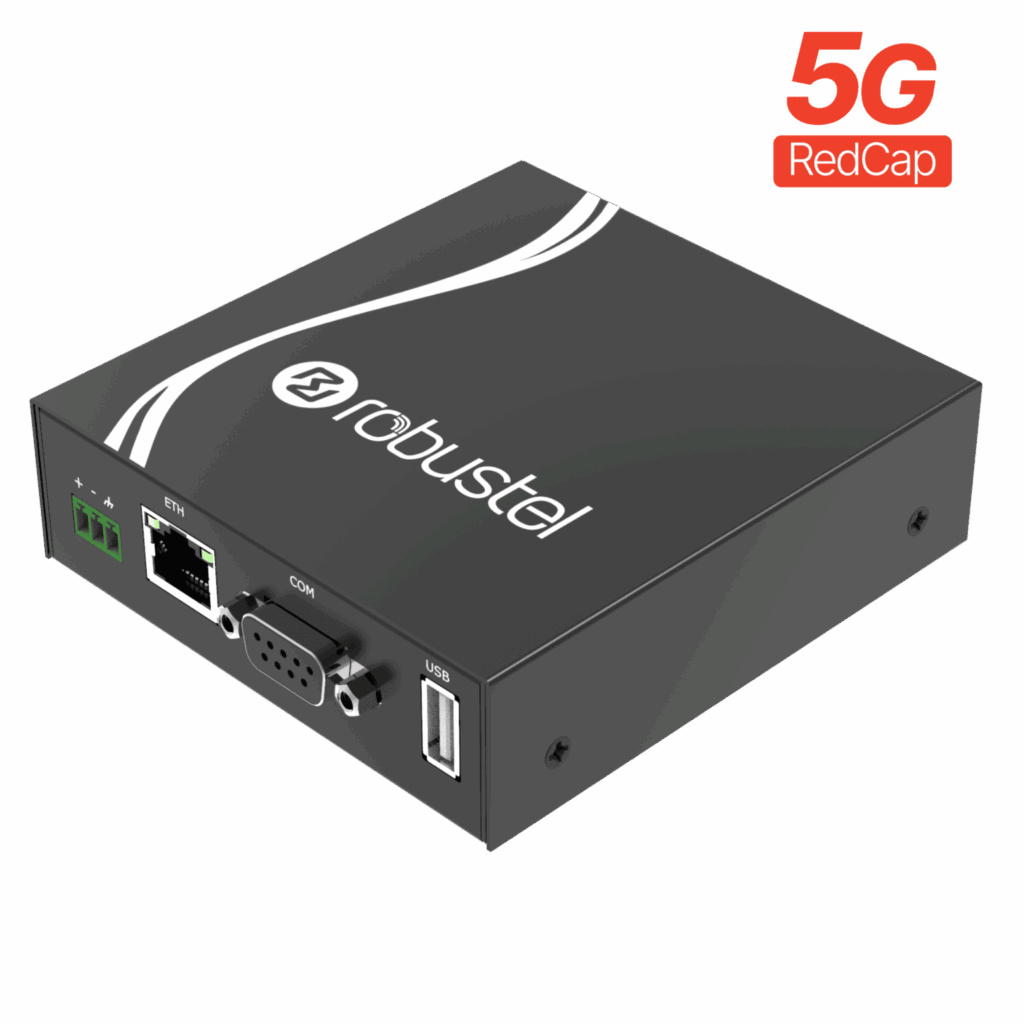
The Robustel R3000-Lite 5G RedCap brings 5G RedCap connectivity to one of Robustel’s most trusted industrial router platforms — purpose-engineered for the demanding environments of metering, pipeline monitoring, energy distribution and industrial control where reliable, secure cellular backhaul is non-negotiable.
Industrial Dual-SIM 5G RedCap IIoT Router with DB9 Serial RS-232 & RS-485
Built on the same hardened metal housing and RobustOS software stack that operators across more than 100 countries rely on, the R3000-Lite 5G RedCap integrates 5G NR-Light (3GPP Release 17) as its primary cellular technology, with 4G LTE fallback and dual-SIM redundancy to maintain connectivity through carrier disruptions without any manual intervention.
What sets the R3000-Lite apart from comparable industrial routers is its native DB9 serial interface, delivering simultaneous RS-232 and RS-485 connectivity from a single port without adapters or custom cabling. This makes it the natural choice for integrators modernising legacy assets: RTUs, PLCs, meters and SCADA field devices with existing serial interfaces can be bridged directly to 5G IP backhaul using Modbus RTU to TCP providing the resilience and operational control that critical infrastructure deployments require.
With a 9–36 V DC wide-voltage input, operating range of -40 to +75°C, and high EMS immunity to Level 3 surge, EFT and conducted susceptibility, the R3000-Lite 5G RedCap is built for enclosures and environments where standard networking hardware cannot be relied upon.
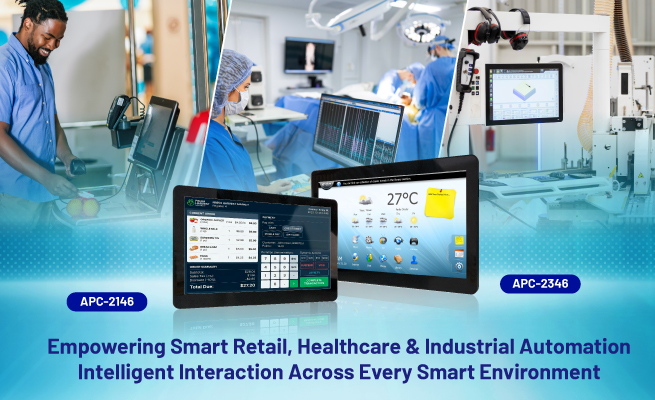
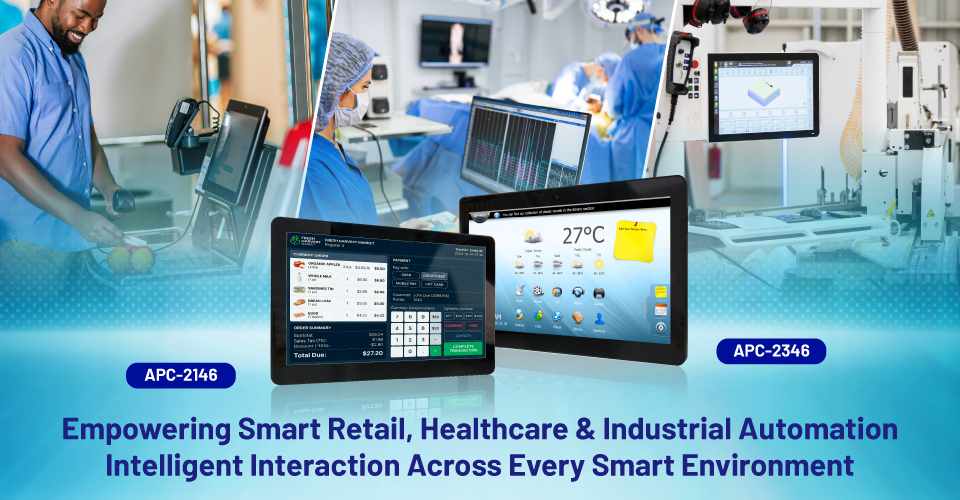
Avalue Technology Inc., a provider specialising in industrial computer solutions, has announced the launch of its new industrial panel PCs, the APC-2146 and APC-2346.
Featuring 21.5-inch and 23.8-inch Full HD displays, the new systems are powered by the Intel® Core™ Ultra 5 125U processor platform and integrate AI computing capability, fanless thermal architecture, and a slim industrial-grade design. The new APC series is designed to address diverse edge computing applications including smart retail, self-service kiosks, smart healthcare and industrial automation.
As AIoT and smart environments continue to evolve, demand for real-time data analytics, human-machine interaction and AI edge inference is rapidly increasing. Combining Intel’s latest Meteor Lake Core™ Ultra platform with a highly integrated architecture and flexible expansion capabilities, the APC-2146 and APC-2346 help system integrators and enterprise customers accelerate intelligent deployments while delivering an ideal balance of performance, reliability and space efficiency for modern edge computing environments.
Powered by Intel® Core™ Ultra Platform for Enhanced AI Edge Computing
The APC-2146 and APC-2346 are equipped with the Intel® Core™ Ultra 5 125U processor, leveraging the latest Meteor Lake architecture and integrated NPU AI engine to significantly enhance CPU and graphics performance. The systems are optimised for real-time data processing, intelligent image recognition, interactive digital applications and AI edge inference workloads.
Both models support up to 32GB DDR5 5600MHz memory and provide an M.2 Key E expansion interface for optional Wi-Fi and Bluetooth modules, enabling high-speed wireless connectivity and IoT integration. The systems also support Windows 10, Windows 11 and Linux operating systems.
Slim and Stylish Design with Industrial-Grade Durability
The APC series adopts a true-flat narrow bezel design with projected capacitive multi-touch technology (PCAP Touch), delivering an intuitive and responsive user experience while maintaining a modern aesthetic.
The APC-2146 features an ultra-slim profile of approximately 45.5 mm, while the APC-2346 measures approximately 49.5 mm in thickness. Both systems utilise a lightweight plastic chassis and fully enclosed fanless cooling design to reduce operational noise and minimise dust accumulation, making them ideal for high-dust, high-usage or mission-critical environments requiring long-term stable operation. The front panel is IP65-rated for water and dust resistance, further enhancing system reliability and ease of maintenance.
Both models offer comprehensive industrial I/O connectivity, including 2 x Intel® Gigabit Ethernet, 4 x USB 3.0, USB Type-C, HDMI, Audio Line-out / MIC-in, and 12~24V DC wide-range power input. The systems support VESA mounting and stand accessories, enabling flexible deployment on walls, counters, machinery, and mobile medical carts.
Smart Retail, Industrial Automation, and Healthcare Markets
For smart retail and self-service applications, the APC series combines high-sensitivity multi-touch capability with high-speed wireless networking to deliver smoother interactive experiences while supporting backend data synchronization and cloud integration.
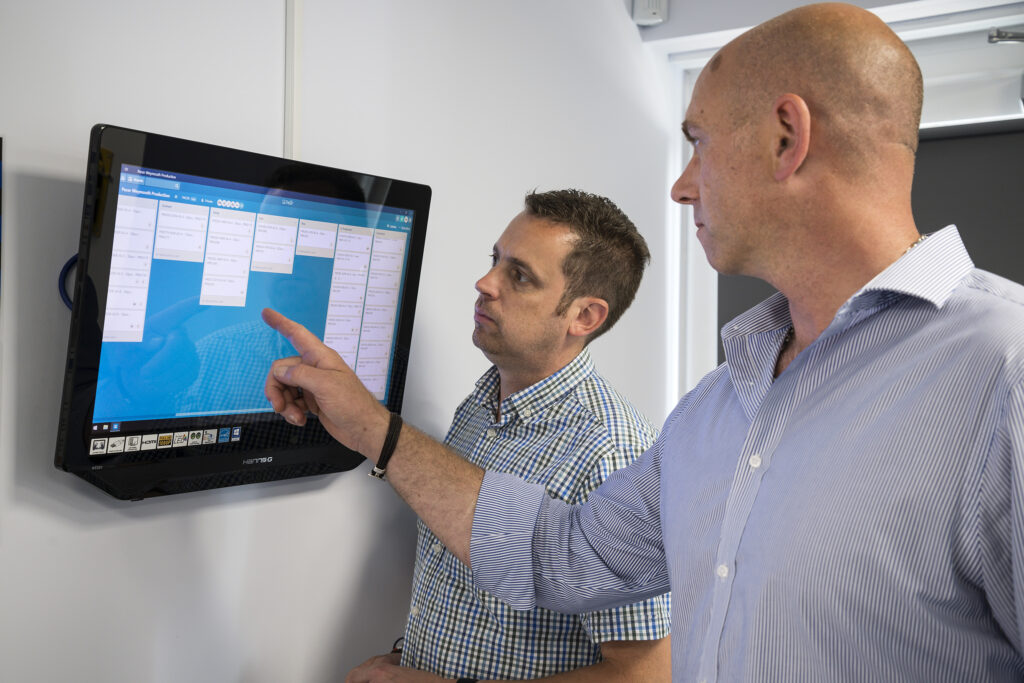
In Industry 4.0 and smart manufacturing environments, the APC series serves as an HMI interface and equipment monitoring platform, supporting real-time production monitoring, quality management and equipment integration. Its fanless architecture, IP65 protection and wide-range power input make it suitable for continuous operation in demanding industrial environments, helping improve production efficiency and equipment reliability.
For smart healthcare applications, the APC series offers low-noise operation, easy maintenance and high reliability, making it ideal for bedside information systems, nursing stations, mobile medical carts and medical equipment interfaces to improve workflow efficiency and patient care quality.
The flexible and reliable TFT LCD display range from Raystar continues to benefit from product innovation with two exciting new products.
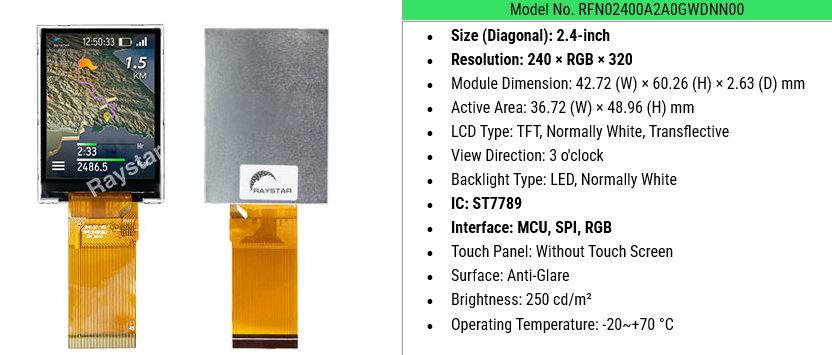
2.4-inch 240×320 Transflective TFT LCD Module
The RFN02400A2A0GWDNN00 is a 2.4-inch 240×320 TN Transflective TFT LCD Module designed to deliver excellent visibility in both indoor and outdoor lighting conditions. Featuring the ST7789 IC, it supports MCU, SPI, and RGB interfaces for flexible system integration. Its transflective design offers strong readability while maintaining low power consumption.
Built for long-term reliability, the RFN02400A2A0GWDNN00 operates within a wide temperature range of -20°C to +70°C and offers a 50,000-hour LED backlight lifetime. With a typical supply voltage of 3.3V, this display ensures stable and consistent performance for industrial controls, handheld GPS devices, and outdoor measuring instruments.
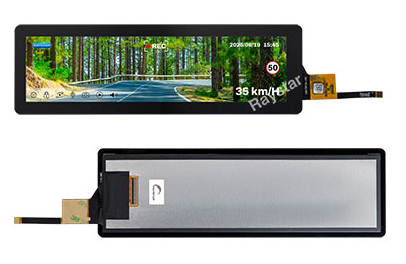
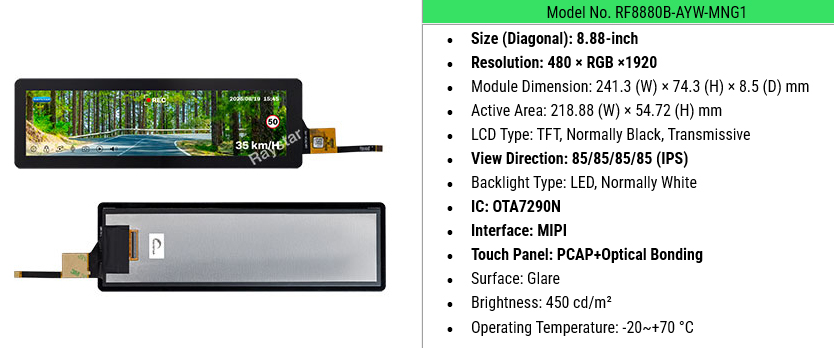
8.88-inch 480×1920 MIPI IPS Bar Type TFT Module with PCAP+Optical Bonding
The RF8880B-AYW-MNG1 is an 8.8-inch 480×1920 MIPI IPS bar type TFT LCD module equipped with a Projected Capacitive Touch Panel (PCAP) using optical bonding. The MIPI interface ensures high-speed, low-power transmission, and simplifying system integration for a variety of embedded and industrial applications.
Designed for performance, the RF8880B-AYW-MNG1 features an PCAP+Optical Bonding that enhances sunlight readability, improves visual contrast, and provides reliable touch accuracy. Operating with low power consumption (3.3V, 35 mA typ.), it’s an excellent choice for audio-visual systems, industrial controls, smart home devices, and medical instruments.
The memory markets are in crisis. DRAM prices have jumped nearly 170% year-on-year and are still rising, due to the huge increase in the building of data centre infrastructure to support AI applications. These conditions are expected to continue throughout 2026. As prices rise and lead times extend, we can help you to navigate these turbulent times.
If you have open demand or projects planned for the coming months, now is the time to engage with Solsta. We have partnerships with Industry-leading memory manufacturers and are currently supported with allocation and pricing where possible. Early conversations can help lock in supply and mitigate further cost increases.
We can:
Buy ahead
Secure and hold stock for extended periods to lock in pricing
Provide reliable and dependable sourcing with anti-counterfeit controls
Offer lower cost alternatives
Provide design services for reducing BOM costs and lead times
Be your trusted adviser on the market situation and solutions available
As of December 2025, DRAM spot prices had nearly tripled year-on-year. DDR5 16GB modules more than quadrupled from July to November with spot prices reaching $200 per module, and some consumer DDR5 memory kits have more than quadrupled in price since May.
The primary driver is skyrocketing demand for memory in AI data centres, as memory manufacturers diverted wafers away from consumer DRAM production to produce high-bandwidth memory for AI servers. This is a supply constraint rather than organic demand growth – manufacturers simply can’t redirect capacity quickly enough.
Major PC makers including Dell, Acer, Lenovo and ASUS implemented price increases ranging from 10-30% in December, with more widespread increases expected in Q1 2026. Micron has exited the consumer memory market, discontinuing its Crucial brand to redirect capacity to AI data centres, leaving Samsung and SK Hynix as the only major consumer DRAM suppliers.
Analyst forecasts vary considerably. Memory prices are projected to rise sharply again in Q1 2026, with TrendForce forecasting more significant price fluctuations by Q2 2026. Some industry sources suggest supply tightness could persist through at least Q4 2027, with the price peak expected around mid-2026. This could significantly impact industrial computing and embedded systems suppliers, particularly if they’re sourcing components with memory components integrated.
The memory market is continuing to harden, with ongoing manufacturer price increases across DDR4, DDR5 and FLASH products. DDR4 availability is tightening as manufacturers shift capacity, DDR5 demand is accelerating rapidly and FLASH pricing is rising due to higher production costs and shifting demand.
These conditions are expected to continue throughout 2026, and the outlook suggests pricing and availability are unlikely to soften in the near term.
Solsta is actively supporting customers with DDR4, DDR5 and FLASH requirements and forward planning. Please contact our Sourcing Team directly to discuss how we can help.
Derek Stewart’s article SoMs and sustainability: designing for long life in a disposable age explores the challenges of ensuring products feature the latest technology while protecting longevity and reliability, and shows how the use of System-on-modules (SoMs) can offer a solution.
The electronics industry faces a paradox. Consumer culture demands ever-faster product refresh cycles, yet industrial and commercial sectors need equipment that operates and can be maintained reliably for decades. Meanwhile, sustainability targets and supply chain volatility add pressure to extend product lifecycles wherever possible.
Many components like memory and processors are driven by the fast-paced consumer market, where greater performance and ever-lower pricing are demanded.
This creates real headaches for engineers working on professional equipment where these types of components are still required. Design a system too conservatively, using mature, tried and tested components, and you risk obsolescence before launch. Build with cutting-edge components and you may struggle with availability five years down the line if they are not well received by the market.
System-on-modules (SoMs) offer a different path. By integrating core processing functions onto standardised, swappable modules, SoMs separate a design’s stable elements from those that need regular updating.
Real-world staying power
The medical sector clearly demonstrates this principle. A dental chair or MRI scanner represents a significant investment, with buyers expecting many years of reliable operation plus ongoing availability of spare parts. These systems can’t follow smartphone replacement cycles. When a component becomes obsolete, you need options beyond “buy a new machine.”
Similarly, the EV-charging infrastructure rollout demands both rapid deployment and long-term reliability. Charge point operators can’t afford to rip out and replace entire installations every few years as technology evolves. They need modular systems that can adapt and upgrade without wholesale replacement.
Industrial automation faces identical challenges. Factory equipment must deliver return on investment over decades, not quarters. When a control system needs updating for new protocols or processing power, modularity beats starting from scratch.
Waste reduction through design
SoMs address waste at multiple levels. Rather than sourcing hundreds of discrete components individually, engineers receive a single, tested module containing what could otherwise be 200-400 separate parts. This consolidation significantly reduces packaging and shipping waste.
More importantly, when technology updates arrive, only the module needs changing. The carrier board, enclosure and other elements remain untouched. Compare this to traditional designs where component obsolescence often triggers complete redesigns, scrapping existing tooling and inventory.
The economics work too. SoMs suppliers maintain much larger volumes than individual product manufacturers, providing better component availability and obsolescence management. When a part does reach end-of-life, reputable suppliers should offer drop-in replacements with identical form factors, avoiding the time and cost consuming changes that plague discrete designs.
Standardisation as a strategy
Rather than each manufacturer burning time and resources on regulatory approval, pre-certified SoMs arrive with existing certifications that can often be transferred to the final product. This accelerates time to market while reducing the duplicated effort and cost across multiple companies developing similar systems.
A well-designed SoM family offers multiple performance levels within identical physical footprints. Customers can generally specify different processing powers, memory configurations and wireless comms options without changing their carrier board designs, supporting product variants and future upgrades without redesign costs.
Incremental updates become possible through this same approach. For example, existing designs can accommodate neural processing units as AI becomes standard, requiring only module swaps rather than complete overhauls.
The shift in thinking
Adoption is spreading beyond traditional SoM markets because, for example, companies producing more than 20,000 units a year are now choosing modules instead of in-house designs, having recognised the hidden costs of developing and maintaining discrete components. The pandemic highlighted supply chain vulnerabilities, while rising design complexity makes self-reliant approaches increasingly expensive.
Rather than viewing SoMs as expensive compared to raw component costs, manufacturers have begun factoring in development time, supply chain management, obsolescence risk and opportunity costs. Internal engineering teams can now focus on differentiating features instead of recreating standard processing architectures.
When security vulnerabilities emerge, SoM-based systems often accommodate incremental firmware updates rather than requiring rebuilt software stacks. This provides a method of keeping products current without the expense and risk of wholesale redesigns.
Beyond throwaway culture
While consumer markets chase ever-shorter replacement cycles, professional and industrial applications demand the opposite. Equipment buyers want systems that remain viable for decades, with clear upgrade paths and guaranteed availability of spare parts.
By planning product lifecycles spanning ten years or more, module suppliers naturally align with these requirements and can offer the longevity guarantees required by non-consumer markets. They manage the complexity of component sourcing, obsolescence planning and technology transitions, allowing equipment manufacturers to focus on their core expertise rather than wrestling with supply chain headaches.
What emerges is more sustainable product development. Systems evolve through selective module updates instead of complete redesigns every few years. With sustainability targets tightening and supply chains remaining volatile, this modular approach offers practical benefits beyond environmental credentials.
In an industry often focused on the next big thing, sometimes the smartest move is building systems designed to last.
Derek Stewart is a Business Development Engineer at Solsta
Avalue Technology has introduced the EPI-ARLS, a compact EPIC SBC designed specifically for industrial and embedded applications. Combining small form factor, high-performance computing, rich I/O connectivity and versatile expansion, EPI-ARLS is tailored to meet the demanding requirements of edge computing, smart manufacturing, healthcare monitoring and precision agriculture.
Powered by Intel® Core™ Ultra processors based on the Intel® Arrow Lake-S architecture, the EPI-ARLS supports up to 35W TDP, delivering a powerful yet energy-efficient performance. The product is ideal for space-constrained environments requiring real-time data processing. With its compact 165 x 115 mm EPIC form factor and a single 262-pin SO-DIMM slot supporting up to 48GB DDR5 5600/6400MHz dual-channel memory, the EPI-ARLS ensures high-speed data analysis and AI inference while simplifying system integration and space optimization.
For expandability, the EPI-ARLS is equipped with one M.2 Key-E slot and two M.2 Key-M slots (the Q870 version exclusively supports dual Key-M), accommodating wireless modules, NVMe SSDs, and SATA devices. It also offers comprehensive I/O options, including up to three 2.5GbE LAN ports (three on the Q870, two on the H810), four USB 3.2, four USB 2.0, and four COM ports (2 x RS-232/422/485 + 2 x RS-232), as well as 1 x 16-bit GPIO and TPM 2.0 for secure and versatile industrial connectivity.
The EPI-ARLS supports triple display output via DP 2.0, HDMI 2.0, and LVDS/eDP interfaces, with resolutions up to 8K—making it a robust platform for industrial imaging, multi-screen control, and visual edge applications.
The EPI-ARLS suits versatile applications including: • Smart Agriculture: Integrates sensor data, vision analysis, and device control to enable precision farming and remote operations. • Healthcare Monitoring: Supports real-time processing and integration of multiple physiological signals, improving patient care quality and clinical efficiency. • Edge Computing: Enables localized data processing and analysis to reduce latency and offload network traffic, ideal for transportation, logistics, and retail environments. • Industrial Automation: Integrates with PLCs, sensors, and control systems via high-speed I/O and multiple communication interfaces to ensure stable and reliable process control.
When compared to Mini-ITX platforms (170mm x 170mm), the EPI-ARLS’s EPIC form factor (165mm x 115mm) offers both space-saving design and sufficient expandability, making it well-suited for integration into size-sensitive, high-performance systems such as robotic arms, high-speed imaging modules and laser cutting devices. Available in both Q870 and H810 chipset versions, the Q870 variant emphasizes comprehensive I/O and triple LAN support for highly integrated systems, while the H810 targets cost-efficiency and streamlined architectures for large-scale deployments and long-life cycle product planning. With modular design and flexible configuration, the EPI-ARLS expands the deployment depth and application breadth of EPIC SBCs in the smart edge landscape.
Main Features of EPI-ARLS:
Top Layer Soldered Socket
Intel® Core™ Ultra Processors supports LGA 1851 CPU Up to 35W Max
Intel® Q870/H810 chipsets
Single DDR5 6400MHz SO-DIMM socket, support up to 48GB
Triple Display: 1 x DP, 1 x HDMI, 1 x 2CH LVDS or 1x eDP (Default LVDS)
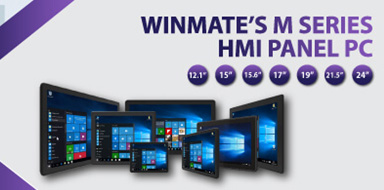
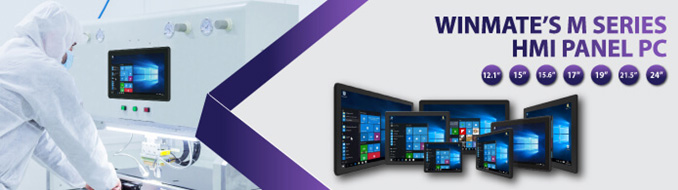
To meet growing demand for versatile, performance-driven interfaces, Winmate proudly introduces the newest addition to its M Series HMI Panel PC lineup: the 15.6-inch model.
Human-Machine Interface (HMI) solutions have become essential for enabling digital transformation, not only on the factory floor but across a wide range of industries including manufacturing, automation and industrial operations. Today’s HMI technology must deliver responsive control, real-time data logging and intuitive monitoring across various applications and environments.
This new size expands the series’ range, offering more options to meet specific control room or field interface needs, while maintaining the signature durability and functionality that define the M Series.
Key Highlights of Winmate M Series HMI
• Versatile Display Size Options Winmate M Series HMI Panel PC is available in screen sizes ranging from 12.1” to 24”, supporting both compact control stations and large-scale automation setups. The new 15.6” model offers increased screen space, making it ideal for detailed process visualization, multi-window monitoring, and complex user interfaces.
• True Flat PCAP Touchscreen Equipped with a projected capacitive (PCAP) touchscreen, the M Series provides a smooth and responsive user experience. The true flat, edge-to-edge design ensures easy cleaning and offers a modern and professional look, well-suited for industrial environments requiring frequent interaction.
• Advanced Computing for Industrial Applications Powered by high-performance Intel processors, the M Series delivers reliable speed and processing power for real-time automation control, data processing, and system analytics, helping improve operational efficiency across industrial workflows.
• Expandability and Serviceability for Field Demands Designed for on-site flexibility, the M Series features a quick-access 2.5” SSD bay that allows for fast storage upgrades or replacements without system downtime. Additionally, PCIe x4 expansion support enables integration with high-speed industrial I/O, AI processing cards, or custom hardware modules, giving users the flexibility to adapt.
• Fanless Design for Quiet, Reliable Operation The fanless thermal solution minimizes maintenance needs and enhances long-term durability, especially in environments with dust, vibration, or temperature extremes. This helps ensure stable, silent performance in even the harshest conditions. Whether deployed in production lines, control rooms, or machinery interfaces, Winmate’s M Series HMI Panel PCs are purpose-built to increase productivity, streamline operations, and scale with evolving automation demands.